Master the backend with Node.js. Discover the essential role of Node.js in handling asynchronous requests, building APIs, and streamlining modern full-stack systems.
The Critical Role of Node.js in Modern Full-Stack Web Development
Building a modern full-stack web application requires a fine balance between a responsive user interface and a rock-solid server-side architecture. While the frontend controls what the users see, the backend is responsible for processing business logic, handling authentication, and managing database transactions. In the current ecosystem of software engineering, Node.js has become an irreplaceable engine powering this backend layer. Whether you are an aspiring full-stack developer or a tech student, understanding the core backend mechanisms will show you exactly what the practical role of Node.js is.
At Vivaa Technologies, we believe in bridging the gap between theoretical concepts and industrial execution, helping you understand how real-world servers manage heavy web traffic cleanly.
What Exactly is Node.js?
Before breaking down its architectural responsibilities, let us clarify a common misconception: Node.js is neither a programming language nor a framework. It is an open-source, cross-platform JavaScript runtime environment built on Google Chrome's high-performance V8 JavaScript engine. Traditionally, JavaScript was restricted to running only inside the user's web browser. Node.js lifted this restriction, allowing developers to execute JavaScript code directly on the machine or web server, independent of any client.
Breaking Down the Role of Node.js in a Web Application
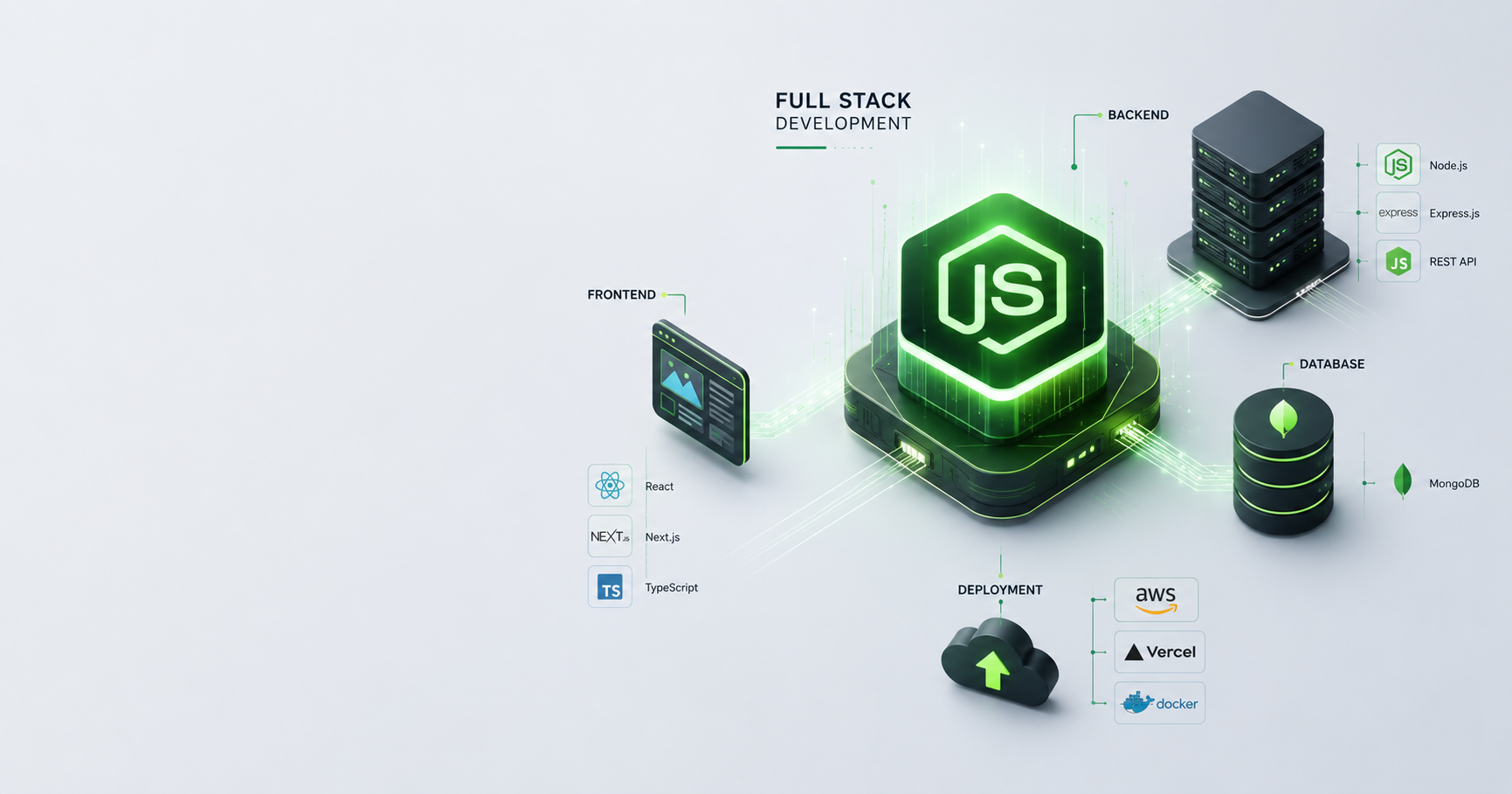
When managing a standard application stack, like the MERN stack, Node.js takes absolute charge of the runtime operations on the server side. Let us explore the critical functions it performs:
1. Fast API Development and Server Management
The primary role of Node.js is to act as the web server that listens for incoming client requests from the frontend app. Working alongside lightweight web frameworks like Express.js, Node.js allows backend engineers to build scalable RESTful APIs or Graph QL endpoints. It processes incoming JSON data streams, routes them to the correct logical controllers, and dispatches responses back to the user instantly.
2. Handling Asynchronous and Non-Blocking Operations
Traditional server runtimes assign a new thread to every single user connection, which can quickly drain server memory during traffic spikes. Node.js operates on a single-threaded event loop architecture using non-blocking Input/Output (I/O) models. When processing heavy tasks like database queries or file transfers, Node.js delegates the action to the system background and continues handling other user requests immediately. Once the task finishes, a callback announces completion. This asynchronous design makes it highly efficient.
3. Managing Database Connections and Data Streams
Node.js acts as the middleware bridge between the web interface and data storage platforms like MongoDB, PostgreSQL, or MySQL. It provides native database drivers and Object-Document Mappers (ODMs) like Mongoose to execute quick Create, Read, Update, and Delete (CRUD) operations. Because Node.js handles data streams beautifully, it can pipe files or heavy binary data directly from the storage layer to the client without overloading server memory buffers.
4. Enabling Real-Time Data Communications
If you are designing a real-time collaborative application, like an instant messaging system, a live dashboard, or an online multiplayer gaming portal, Node.js is the perfect fit. Combined with Web Sockets through libraries like Socket.io, Node.js creates a persistent, two-way open channel between the client and the server. This enables continuous data exchange with near-zero latency.
Conclusion
Ultimately, the true role of Node.js is to serve as the unified, highly responsive backbone of your digital product. By letting you write server-side code in JavaScript, it eliminates language barriers between frontend and backend architectures, allowing development teams to deploy projects much faster.
To turn these theoretical insights into production-level code, explore the practical full-stack paths and industry mentorship sessions available at Vivaa Technologies today.