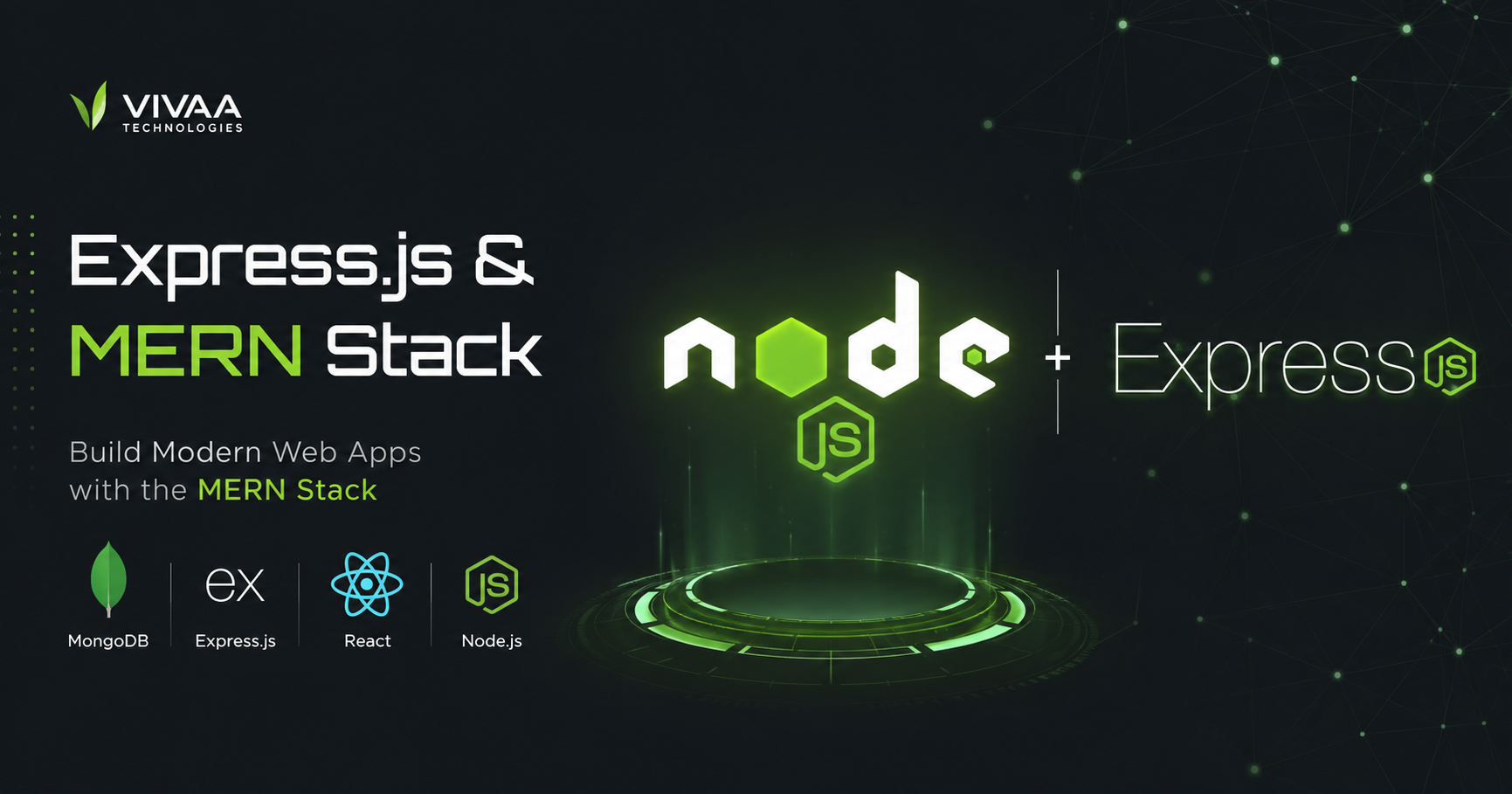
Express.js is a crucial component of backend development. In this blog, we will explore how Express.js functions within the MERN stack and analyze its core architectural features.
Express.js Role in MERN Stack Setup Explained
When we talk about building fast, scalable, and efficient web applications in the modern development landscape, the MERN stack is consistently the top architectural choice. The MERN stack consists of four powerful technologies working in unison: MongoDB, Express.js, React.js, and Node.js.
While React handles the user interface on the client side and MongoDB manages data storage on the backend, have you ever wondered how communication actually occurs between the frontend interface and the database? This is exactly where Express.js comes into play. In this comprehensive guide, we will break down what Express.js is and evaluate its specific technical role within the MERN stack.
What is Express.js?
Express.js, commonly referred to as just Express, is a minimalist, unopinionated, and flexible web application framework built on top of Node.js. Writing native backend server logic using raw Node.js modules can quickly become long, tedious, and highly complex. Express.js simplifies this entire pipeline by providing a robust set of features designed to build web applications and RESTful APIs seamlessly.
To put it in simple terms, if Node.js is the core engine of a vehicle, Express.js is the beautifully engineered dashboard and control system that makes driving smooth, structured, and effortless.
The Role of Express.js in MERN Stack
To truly master web development, understanding the exact Express.js role in MERN stack applications is essential. In the MERN stack ecosystem, Express.js operates as the backend middleware layer and the primary routing engine. Without its integration, managing network requests between React and MongoDB would require writing hundreds of lines of complex boilerplate code. Let us analyze its primary roles:
1. Server Creation and Management
Setting up a stable server environment is the foundational step in backend development. With Express.js, developers can spin up a functional HTTP server in just a few lines of clean code. This server continuously listens for incoming requests from the client side (React frontend) and dispatches the appropriate responses.
2. Robust Routing System
When a user navigates through different sections of a web application (such as /profile, /products, or /login), the backend server must instantly recognize the incoming HTTP methods (GET, POST, PUT, DELETE) and determine the exact data payload to return. Express.js provides a highly organized routing mechanism that handles these URL endpoints modularly.
3. Middleware Architecture
Middleware functions are the true powerhouse of Express.js. These are functions that execute sequentially during the request-response lifecycle—right after receiving a client request and just before sending back the server response. Developers utilize middleware for critical tasks like user authentication checks, parsing incoming JSON data payloads, logging network activity, and global error handling.
4. Database Integration Layer
Due to security protocols and architectural standards, a React frontend cannot communicate with a MongoDB database directly. Instead, React dispatches an API network request to Express.js. Using an Object Data Modeling (ODM) library like Mongoose, Express.js securely queries the MongoDB database, fetches or updates the required documents, and formats the data into a clean JSON response to send back to React.
Key Advantages of Using Express.js
Accelerated Development: It provides pre-defined structural utilities that eliminate hours of low-level boilerplate coding.
High Throughput Performance: Being built over Node.js, it inherits asynchronous, non-blocking I/O characteristics, allowing it to handle thousands of concurrent client requests efficiently.
Scalable Codebase: Its modular nature makes it exceptionally easy to scale large enterprise-grade applications without breaking existing logic patterns.
Conclusion
Express.js is the vital backend framework that silently powers the entire application architecture from behind the scenes. It serves as the secure, high-performance bridge connecting the client-side user interface to the core application database. Consequently, mastering Express.js is an absolute necessity if you intend to establish a career as a successful Full Stack Developer.
At Vivaa Technologies, our comprehensive Full Stack MERN Ultra Course teaches you Express.js, system architecture, and advanced API development from absolute scratch with hands-on live mentorship, ensuring you are thoroughly prepared for the modern tech industry.